I design in code now. Side projects, product explorations, things I used to mock in Figma: they start as SwiftUI prototypes and go straight to TestFlight. The building part got fast. The feedback part broke. Reactions to a prototype come back as texts, Slack screenshots, and hallway comments. No context, no attribution, nothing in one place.
Figma solved this years ago for static design: you share a file, people comment on the pixels they mean. There was no equivalent for a running app on a stakeholder's phone. So I built one.
What it is
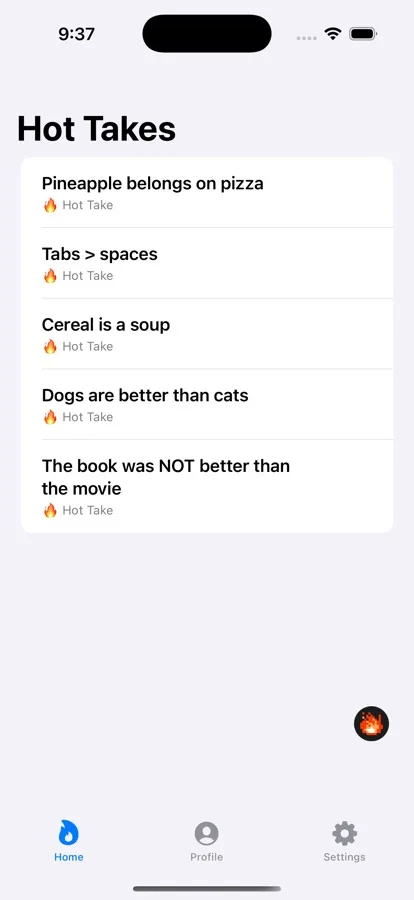
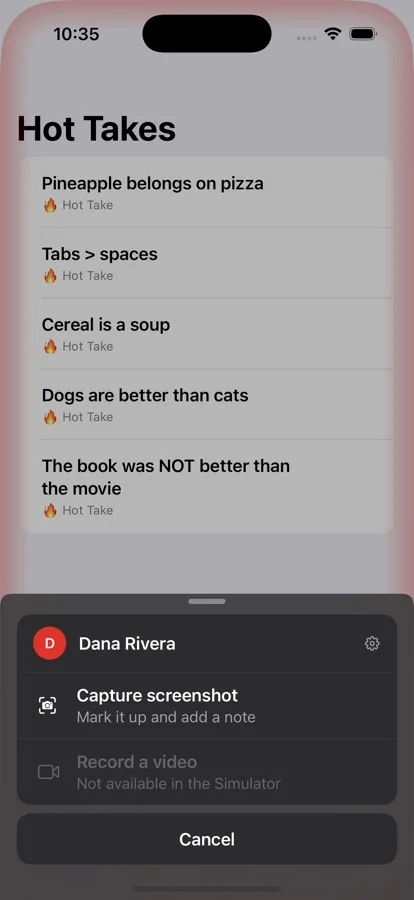
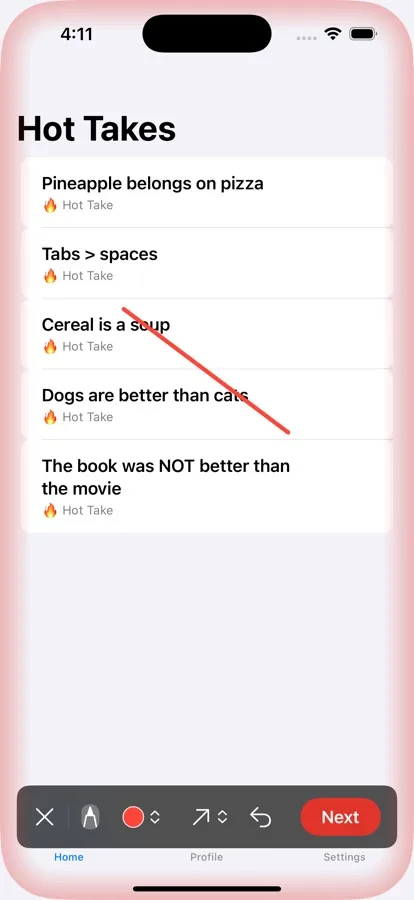
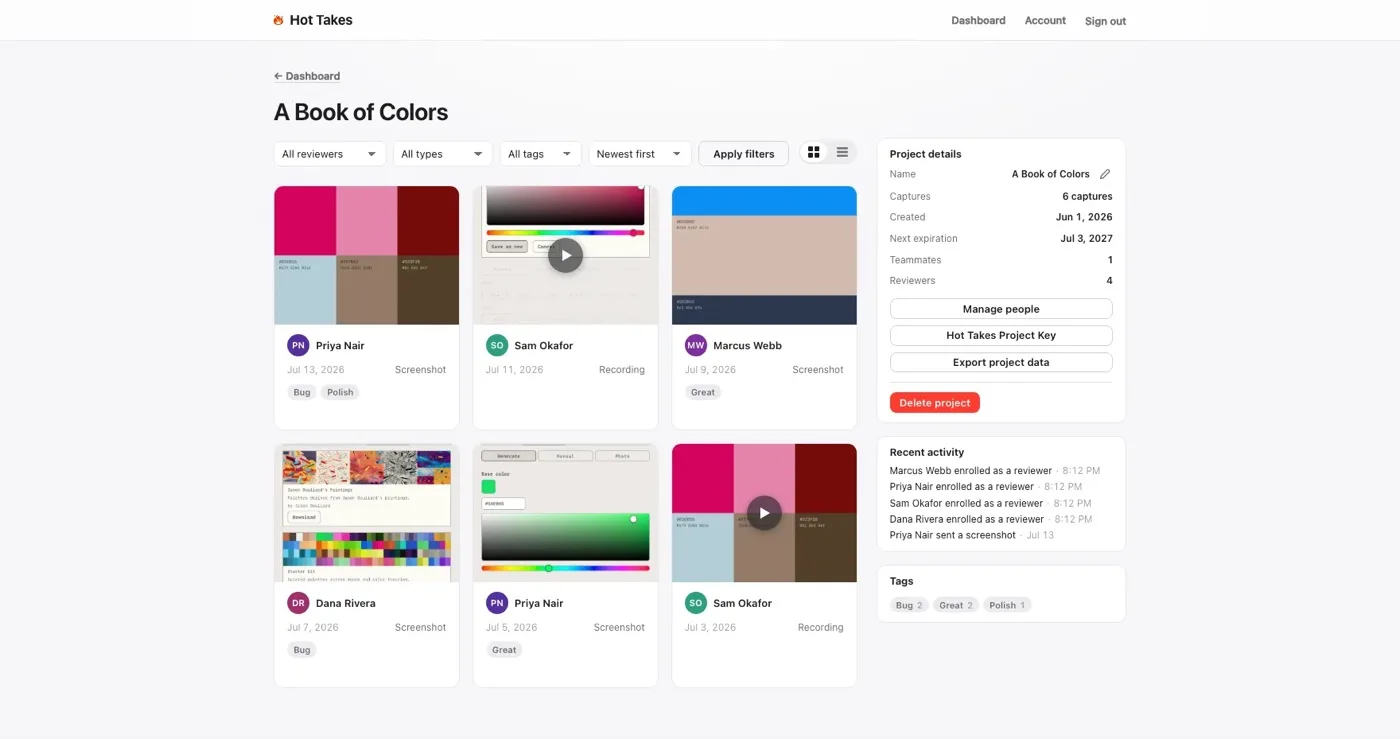
Hot Takes is an iOS SDK plus a web gallery. One line of Swift adds a small flame pill to any prototype. A stakeholder taps it, grabs a screenshot or records a video with voiceover, marks it up, adds a note, and sends. Every capture lands in a per-project gallery on the web, tied to a verified person, tagged and filterable. Reviewers never create an account: they verify with an email code the first time, right inside the app.
How I built it
I lead design teams for a living. I am not a full-time engineer, and I did not type most of this code. I directed AI agents, and the process is the part worth sharing.
Four days from approved spec to production at hottakes.app. The speed came from structure, not from letting an agent run loose:
- Spec first. We brainstormed scope, wrote a spec, and I approved it before any code existed. Then a plan of small, testable tasks.
- A fresh agent per task, with a self-contained brief. No inherited context, no drift.
- An independent adversarial review of every task before merge. The reviewer's job is to attack the change, not to approve it.
- Test gates on everything: hundreds of unit tests, about nine hundred database tests, browser flows, and screenshot baselines on the web side, six hundred plus tests on the SDK. A red gate blocks the merge, every time.
I stay at three gates: design approval, product decisions, and merges. Between the gates, the agents run.
The reviews are not theater
Adversarial review sounds like process for its own sake until it catches something. It caught a data-loss race that had been dismissed as a test flake three separate times. It caught a change that would have left the feedback pill invisible and untappable after a rename, a bug structurally invisible to all six hundred unit tests because it lived in an animation path the tests bypassed.
And the best bug was nobody's fault. Enrollment kept failing with valid credentials, and both codebases traced correct three times. The root cause: the bare domain redirected to www, and iOS silently strips the Authorization header when a request follows a redirect across hosts. The fix was one URL. The lesson is old: when the code on both sides is right, look at the wire.
Where the human stays
Every product call in Hot Takes is mine: the capture flow, the note-on-send step, what the pill looks like, what a reviewer sees the first time, pricing, storage caps, what got cut. I reviewed most of it live on my phone, sending annotated screenshots back as direction. The agents own the tickets. I own the taste.
The stack, for the curious: Next.js on Vercel, Supabase with row-level security doing real work, Stripe, and a plain Swift package for the SDK. Nothing exotic. The interesting part was never the stack.
Try it
Hot Takes is in private beta at hottakes.app. If you vibecode prototypes and want your stakeholders' takes in one place instead of scattered across six apps, it is built for you. I am inviting testers now: contact me for access.
This is fun.